Snowplow Berm Blocking Your Driveway? Here’s What to Do
Snowplow berm blocking your driveway? Learn DIY methods, best tools, safety tips, and when it’s smarter to call in a pro for heavy, packed plow piles.
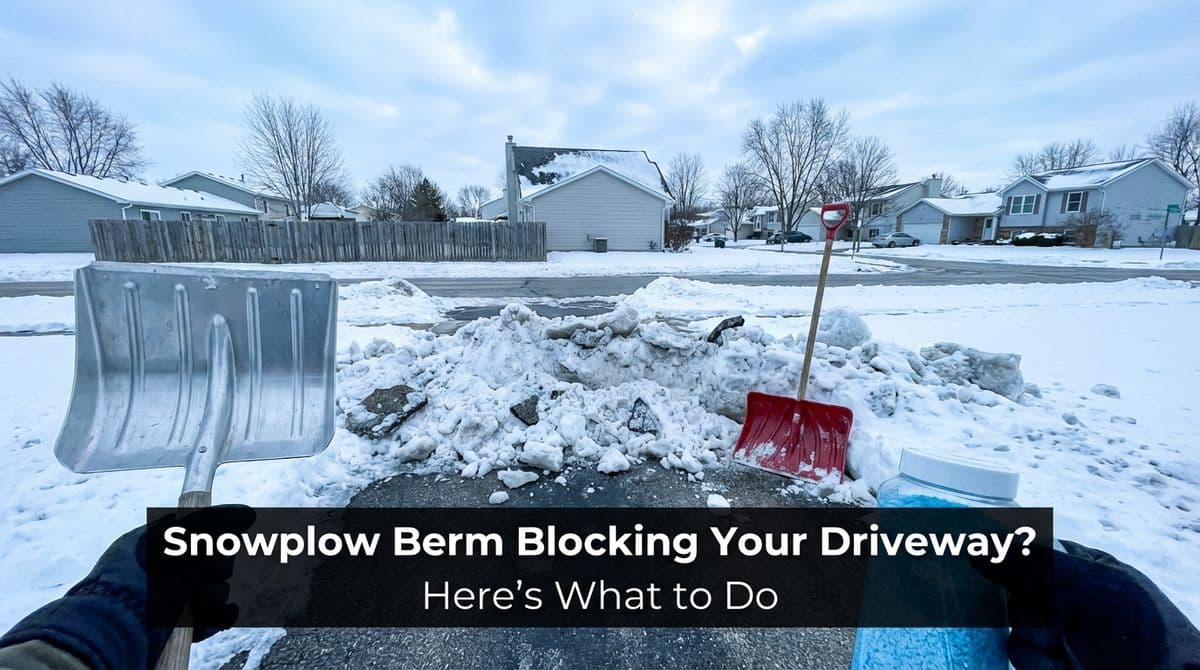
A Snowplow Berm So Big the Snowblower Quit
We recently got a call from a homeowner — let’s call him Tom — who lives on a corner lot with a wide, short driveway. The city plow had just come through, and like so many folks in our area, Tom ended up with a 2–3 foot berm of packed snow and ice blocking his driveway entrance.
He told me, “My snowblower does fine on the rest of the driveway, but it just won’t chew into that berm. I’ve been stuck at home for two days.” He didn’t necessarily need a full-season snow contract; he just needed that wall of snow gone so he could get out — ideally today.
We headed over for a quick one-time service, but his situation is so common that it’s worth walking through your options: what you can realistically do yourself, which tools help, and when it makes sense to call in a pro.
What Exactly Is a Snowplow Berm (and Why Is It So Tough)?
A snowplow berm is the ridge of snow and slush left at the end of your driveway when the city plow clears the street. It’s not the same as the fluffy snow that fell from the sky.
By the time that snow reaches your driveway edge, it’s usually:
- Heavily compacted by the weight of the plow and traffic
- Mixed with road slush, sand, and salt
- Partially refrozen into chunks or ice boulders
That’s why Tom’s snowblower “wouldn’t chew into it.” Most residential blowers are great for loose snow, but a plow berm can be closer to concrete than powder.
DIY Options: How to Tackle a Snowplow Berm Yourself
If you’re reasonably able-bodied and the berm isn’t gigantic, you can sometimes handle it yourself with the right approach. Here’s how we recommend doing it.
1. Start with the Right Hand Tools
For dense berms, your tools matter as much as your effort. The basics we suggest:
- Sturdy snow shovel with a metal edge — not a flimsy plastic blade
- Ice chopper or heavy-duty metal spade for breaking up chunks
- Snow pusher for moving loose snow once you’ve broken it up
Think of it as a two-step job: break up the berm, then move it. If you go straight to lifting big blocks with a shovel, you’re more likely to strain your back.
2. Work in Small Sections & Layers
One of the big mistakes we see is trying to clear the whole width of the driveway all at once. Instead:
- Pick a 3–4 foot wide section to open up first.
- Chop the berm from the street side toward the driveway in layers.
- Remove snow in thin slices from the top down, rather than full-height chunks.
This gives you a usable opening faster and reduces the weight of each shovel load.
3. Use Your Snowblower Strategically
Even if your snowblower can’t handle the full berm, it can still help:
- Manually break up and loosen the first 1–2 feet of the berm.
- Once it’s chunked up, let the snowblower eat the loose pieces behind the area you’ve chopped.
- Avoid ramming the blower into solid ice — that’s how shear pins break and augers get damaged.
With Tom, this is exactly where he was stuck: the machine could handle the driveway but not the wall at the end. A few minutes of mechanical help made all the difference.
Tools and Techniques That Make a Big Difference
If you deal with berms every winter, upgrading a few things can save your back and your time.
Heavier-Duty Equipment
- Two-stage snowblower: These handle heavier, wetter snow better than single-stage units.
- Tractor or ATV with a plow: Great for longer or wider driveways; they can push berms back before they get too high.
- Ice melt (used sparingly): Can help loosen the bond at the base, but don’t overdo it near lawns or sensitive concrete.
Even with better equipment, you still want to respect the weight and density of plow berms. Go slow and avoid forcing the machine.
Safety Tips When Attacking a Berm
We see a lot of injuries from “just trying to get that plow pile out.” Protect yourself by:
- Lifting with your legs, not your back; keep loads small.
- Taking frequent breaks; cold weather masks how hard you’re working.
- Wearing traction footwear to avoid slips on packed snow and ice.
- Staying visible if you’re near the street — wear bright clothing and be aware of passing cars.
When It’s Time to Call a Pro
In Tom’s case, the berm was 2–3 feet high, dense, and across a wide driveway on a bitterly cold day. He’d already been stuck at home for two days and didn’t want to risk an injury. That’s when it makes sense to get help.
Consider calling a pro if:
- The berm is taller than your knees and hard as a rock.
- You have any back, heart, or breathing issues.
- You’re dealing with a corner lot or extra-wide driveway that catches more plow snow.
- You’re short on time and need out today after a big storm.
We’re often able to swing by for a one-time berm clearing, just like we did for Tom. It took us only a short visit with the right equipment to open up his drive so he could get back to normal.
One-Time Help vs. Ongoing Snow Service
During that call, Tom also asked something we hear a lot: “Do I have to sign up for a package for you to help me?” The answer is no — we can usually do one-time work when our schedule allows. But if you’re finding yourself trapped by berms storm after storm, a plan might make sense.
Many companies (ours included) offer different tiers, such as:
- Priority routes: Driveway cleared within a set number of hours after the snow stops.
- Economy or “snowbird” routes: Perfect if you work from home or don’t need to be out right away; service may happen within 24–48 hours.
The key is being clear about how soon you need to get out and what kind of storms you want covered (for example, anything over 2 inches vs. only major events).
Planning Ahead for the Next Storm
You can’t stop the city plow, but you can make your life easier by planning ahead:
- Keep a clear area beside the driveway where you can throw snow so it doesn’t build into a taller wall.
- Try to push back snow banks after each storm, not just the first one.
- Decide now whether you’ll be DIYing or calling for help after big storms so you’re not scrambling when the berm shows up.
If you’re staring at a berm that your snowblower won’t touch and you’re not sure how to tackle it safely, you’re not alone. We deal with these every winter, and sometimes the smartest move is to let a crew with the right equipment handle the heavy lifting while you stay warm inside.